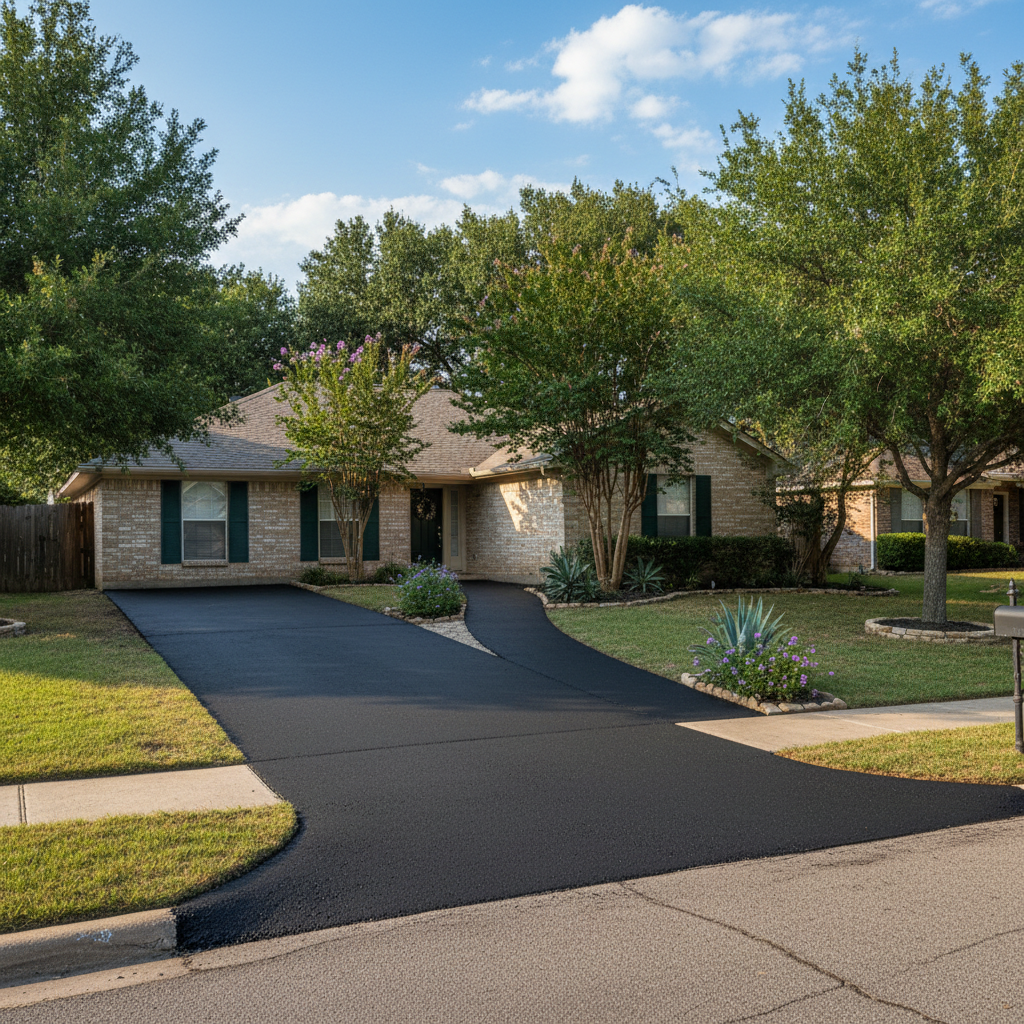
Let's talk money. Specifically, what it costs to get a good asphalt job done on your home right here in Round Rock. I get calls all the time from folks trying to figure out if the quote they got is fair, or if they're about to get taken for a ride. It's not always straightforward, but I can tell you what to look for and what to expect.
What Makes Asphalt Pricing Go Up or Down?
A bunch of things factor into the final price tag for residential asphalt paving. It's not just a flat rate per square foot, though that's definitely part of it. Here's what I'm looking at when I put together a quote:
- Size and Shape of the Area: This is pretty obvious, right? A bigger driveway means more material, more labor, more time. But the shape matters too. A perfectly rectangular driveway is easier and quicker to pave than one with a lot of curves, odd angles, or multiple turnarounds. More intricate shapes mean more cutting, more handwork, and, frankly, more fussing to get it just right.
- Current Condition of the Subgrade: This is huge, and it's where a lot of contractors cut corners. If your existing base isn't stable – maybe it's got soft spots, poor drainage, or a lot of old, broken-up concrete – we can't just pave over it. We'll need to excavate, bring in new aggregate, compact it properly, and sometimes even install drainage solutions. That adds cost, sure, but it's non-negotiable if you want your asphalt to last. Ignoring a bad subgrade is like building a house on sand; it's just going to fail.
- Asphalt Thickness: For most residential driveways, I recommend at least 2 to 3 inches of compacted asphalt over a solid base. Some folks try to save a buck by going thinner, but you'll regret it. Thinner asphalt cracks and degrades faster, especially with our Central Texas heat and the heavy clay soils we often deal with, like in areas around Brushy Creek. You'll be repaving sooner, and that's not saving money in the long run.
- Accessibility: Can my equipment get in and out easily? If we're working in a tight spot, or if there are obstacles we have to work around, it takes more time and specialized equipment. Think about a long, narrow driveway with mature trees on both sides compared to a wide-open suburban lot.
- Demolition and Hauling: If we're tearing out an old concrete driveway or a really beat-up asphalt one, that's extra work. We have to break it up, load it, and haul it away to a proper disposal site. That's a cost that gets passed on, naturally.
- Drainage Solutions: Sometimes, the existing drainage isn't good enough, or a new layout creates new drainage challenges. We might need to install a French drain, a catch basin, or adjust the grading to make sure water flows away from your house, not toward it.
Typical Cost Ranges for Round Rock Driveways
Okay, you want numbers. For a standard residential asphalt driveway, you're generally looking at a range of $3.50 to $7.00 per square foot. This is a broad range because of all those factors I just mentioned. Let's break it down a bit:
- Basic Overlay (no major subgrade work): If your existing asphalt is mostly sound and just needs a fresh top layer, you might be on the lower end, around $3.50 - $4.50 per square foot. This assumes minimal prep work.
- New Installation (standard prep): For a completely new driveway where we're building up a good base and laying 2-3 inches of asphalt, you're probably in the $4.50 - $6.00 per square foot range.
- Complex Jobs (extensive prep, drainage, or difficult access): If we're doing a lot of excavation, extensive base repair, or dealing with tricky site conditions, you could see prices creep up to $6.00 - $7.00+ per square foot.
So, for an average two-car driveway, say 400-600 square feet, you could be looking at anywhere from $1,400 to $4,200 for a basic overlay, or $1,800 to $4,200 for a new installation with standard prep. Larger, more complex driveways could easily run $5,000 to $10,000 or more. It really depends.
What Should Be in Your Quote?
When Horizon Paving Solutions gives you a quote, we make sure it's clear. Here's what you should expect from any reputable contractor:
- Detailed Scope of Work: It should clearly state what's being done. Is it an overlay? A full tear-out and replace? How much excavation? What kind of base material?
- Material Specifications: How many inches of compacted asphalt? What type of asphalt mix?
- Preparation Details: Will they be grading the area? What about compaction of the subgrade?
- Drainage Plan: If drainage is an issue, how will they address it?
- Timeline: An estimated start and completion date.
- Warranty Information: What kind of guarantee do they offer on their work?
- Total Cost: The final price, with no hidden fees.
How to Avoid Overpaying (or Getting a Bad Job)
Don't just jump at the lowest bid. Seriously. I've seen too many homeowners regret that decision. Here's my advice:
- Get Multiple Quotes: Three quotes is a good number. Don't just compare the bottom line; compare what each contractor is offering for that price.
- Ask for References: A good contractor will happily provide them. Call them! Ask about their experience, if the job stayed on budget, and if they'd hire them again.
- Check Their Insurance: Make sure they're properly insured (liability and workers' comp). You don't want to be on the hook if something goes wrong.
- Understand the Details: If a quote is vague, ask questions until you understand exactly what you're paying for. If they can't explain it clearly, that's a red flag.
- Don't Pay Upfront: A reputable contractor won't ask for the full payment before the job starts. A reasonable down payment (10-30%) is common, with the balance due upon satisfactory completion.
- Beware of Door-to-Door Sales: If someone shows up unsolicited offering a deal because they 'just finished a job down the street,' be very cautious. This is a common scam tactic.
Getting a new asphalt driveway is an investment in your home. Do your homework, ask the right questions, and don't be afraid to walk away if something feels off. You want a quality job that lasts, and that starts with finding the right crew at a fair price.