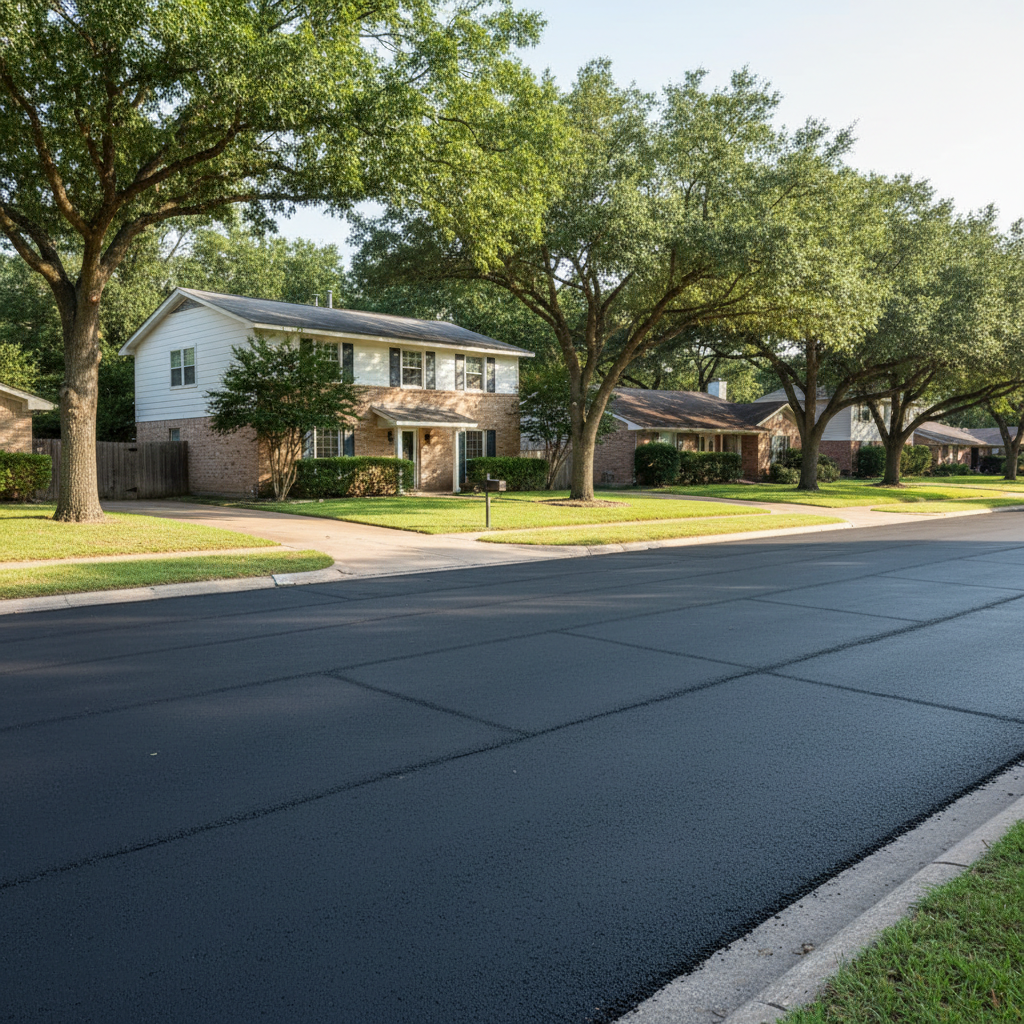
Alright, let's talk about asphalt patching here in Round Rock. You've seen it — those ugly cracks, the potholes that make your car's suspension groan. It's not just about looks, though that's definitely part of it. When your asphalt starts breaking down, it's trying to tell you something, and ignoring it? Well, that's just asking for bigger, more expensive problems down the road.
I've been working on driveways and parking lots around here for years, from the older homes in Mesa Park to the newer developments out near Hutto. One thing's for sure: our Central Texas climate is tough on pavement. We get those scorching summers, then the sudden, heavy downpours, and let's not forget the freeze-thaw cycles we sometimes get in winter. All that expansion and contraction, plus water seeping into tiny cracks, is a recipe for potholes and alligator cracking. You can't fight Mother Nature, but you can definitely manage the damage, right?
What Kind of Patching Are We Talking About?
When I talk about patching, I'm not just talking about throwing some cold patch mix into a hole and calling it a day. That's a temporary fix, at best, and it usually doesn't last. For a lasting repair, we're typically looking at a few different methods:
- Saw-Cut & Remove: This is the gold standard for potholes and larger, isolated areas of damage. We'll cut out the bad section, remove all the old material, clean the base, and then lay down fresh, hot asphalt. It's like replacing a bad tooth with a good one. This is what you want for a repair that's going to hold up.
- Infrared Patching: This is a pretty cool technique for smaller areas or surface irregularities. We heat up the existing asphalt until it's pliable, rake in some new material, and then re-compact it. It creates a seamless bond, which means less chance of water getting in around the edges. It's efficient and effective for the right kind of damage.
- Skin Patching (Overlay): Sometimes, if the surface is generally sound but has a lot of minor cracking or raveling, a thin overlay can extend its life. It's not a fix for structural problems, but it can smooth things out and protect the underlying pavement.
The key is picking the right method for the problem you've got. You wouldn't use a band-aid for a broken leg, would you? Same idea with your asphalt.
Why Local Expertise Matters for Round Rock Pavement
You might think asphalt is asphalt, no matter where you are. But trust me, that's not how it works. The soil conditions here in Round Rock, especially that expansive clay we've got, play a huge role in how your pavement performs and fails. If you're not accounting for that, your patches aren't going to last. I've seen countless jobs where someone from out of town came in, did a quick fix, and it failed within a year because they didn't understand the local ground.
We know the common issues we face here. We know how the sun bakes everything, and how the flash floods can undermine a poorly repaired edge. When Horizon Paving Solutions does a job, we're not just filling a hole; we're addressing the underlying cause and using materials and techniques that are proven to work in our specific environment.
Don't wait until a small crack turns into a crater. Getting those patches done right, and done early, saves you money in the long run by preventing a full repave. It keeps your property looking good and, more importantly, keeps it safe for everyone who drives or walks on it.