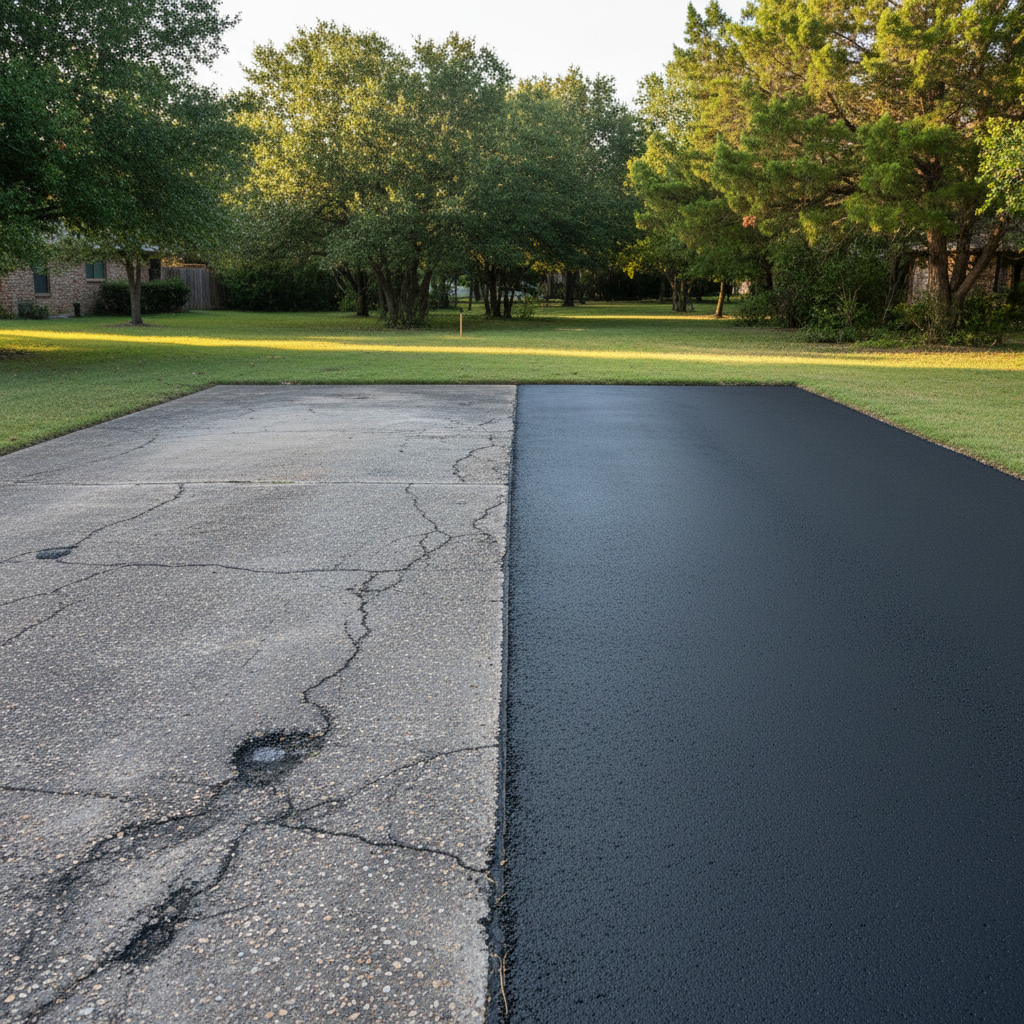
Alright, let's talk about your commercial parking lot or private road. Eventually, that asphalt's gonna give you trouble. Cracks, potholes, general wear and tear – it just happens. When it does, you've got two main routes to go down: an asphalt overlay or a full-depth replacement. I see folks all over Round Rock, especially in older areas like the Chisholm Valley, trying to figure out which one makes the most sense. It's not always clear-cut, so let me lay it out for you.
Asphalt Overlay: The Quick Fix (Sometimes)
An overlay is basically what it sounds like. We clean up your existing asphalt surface, maybe patch up the worst spots, and then lay a fresh layer of new asphalt right on top. Think of it like giving your parking lot a fresh coat of paint – or maybe a new skin. It's usually a thinner layer, about 1.5 to 2 inches thick, depending on what's underneath.
Pros of an Overlay:
- Cost: This is usually the big one, right? Overlays are almost always cheaper upfront than a full replacement. Less material, less digging, quicker job.
- Speed: We can get an overlay done much faster. That means less disruption to your business or your tenants, which is a huge plus for most folks.
- Appearance: You get that nice, fresh black look. It smooths out minor imperfections and makes the whole area look sharp again.
Cons of an Overlay:
- Durability: This is where you really need to pay attention. An overlay is only as good as the foundation it's sitting on. If your existing asphalt has deep structural issues – like alligator cracking all over the place, major potholes, or drainage problems – an overlay is just putting a band-aid on a broken bone. Those underlying issues will eventually show right through the new layer.
- Lifespan: You're generally looking at a shorter lifespan compared to a full replacement, maybe 7-10 years if everything else is in good shape.
- Height: Adding a new layer raises the surface elevation. You've got to consider things like drainage, curb heights, and how it meets up with sidewalks or building entrances. Sometimes, we have to mill down the edges to make it work, which adds cost.
Full Depth Replacement: The Long-Term Solution
This is the big kahuna. A full-depth replacement means we rip out all the old asphalt, right down to the base layer. We inspect and often re-grade or reinforce that base, then lay down all new asphalt from scratch. It's a complete rebuild.
Pros of a Full Depth Replacement:
- Durability and Lifespan: This is where full replacement really shines. You're getting a brand-new pavement system designed to last. With proper maintenance, you can expect 15-20 years, sometimes even more. You're addressing any base issues, which is critical for long-term performance, especially with our expansive clay soils here in Central Texas that can shift and cause problems.
- Structural Integrity: You're building from the ground up, ensuring a solid foundation. This means fewer future headaches from underlying problems.
- Drainage: We can re-establish proper slopes and drainage, which is huge for preventing water damage and extending the life of your pavement.
Cons of a Full Depth Replacement:
- Cost: No getting around it, this is more expensive upfront. More material, more labor, more equipment, more disposal fees.
- Time and Disruption: It takes longer. Your lot or section of road will be out of commission for a longer period, which can impact your business operations.
- Environmental Impact: More material to remove and dispose of, though recycling options are often available for old asphalt.
So, Which One's Right for Your Round Rock Commercial Property?
Here's the deal: if your asphalt has widespread structural failure – I'm talking about deep, interconnected cracks (alligator cracking), significant potholes that go all the way through, or a base that's clearly failing and moving – an overlay is just throwing money away. You'll be back to square one in a few years, and you'll have paid twice. In those cases, a full-depth replacement is the only smart long-term investment.
However, if your asphalt is mostly solid, but it's got a lot of surface cracking, fading, or minor potholes that haven't compromised the base, an overlay can be a fantastic, cost-effective solution. It'll give you a fresh look and several more years of good service without breaking the bank.
The best way to figure it out? Get a professional assessment. We'll come out, take a look at your lot, and give you an honest opinion based on the actual condition of your pavement and what you're trying to achieve. We've helped plenty of businesses around here at Horizon Paving Solutions make the right call, saving them money and headaches down the road. Don't guess – let's get you set up with the right solution.